
Highlights:
- Pretend play helps young children build language, problem-solving, and emotional regulation skills without feeling like formal instruction.
- Simple household items—cardboard boxes, stuffed animals, spare fabric—are often enough to set up rich, engaging play scenarios.
- Role-play activities like running a grocery store, cafe, or post office naturally introduce early math, reading, and writing practice.
- Scenarios involving animals or caretaking roles, such as a vet clinic or rescue center, are especially effective for building empathy and responsibility.
- Letting kids take the lead and asking open-ended questions makes pretend play more valuable than trying to script or correct it.
- Acting out stories or hosting a pretend science lab strengthens comprehension, confidence, and early scientific thinking through hands-on exploration.
- Rotating props and joining in occasionally keeps play fresh and helps model new vocabulary and ideas for children.
If you’ve ever watched a toddler turn a cardboard box into a spaceship or a kitchen chair into a throne, you already know that kids don’t need much to spark their imagination. Pretend play isn’t just a way to pass the time before nap o’clock. It’s actually one of the most powerful tools young children have for making sense of the world around them. When kids act out roles, invent stories, and build pretend scenarios, they’re quietly practicing language, problem-solving, emotional regulation, and social skills without even realizing they’re “learning” anything.
The good news for parents, caregivers, and teachers is that you don’t need fancy toys or a big budget to encourage this kind of play. A few household items, a little bit of space, and some enthusiasm are usually all it takes. Below are ten pretend play ideas that are simple to set up, endlessly flexible, and genuinely fun for kids to dive into.
Why Pretend Play Matters So Much
Before jumping into the ideas themselves, it helps to understand why pretend play is such a big deal developmentally. When a child pretends to be a doctor, a chef, or a dragon, they’re actually flexing several mental muscles at once. They’re practicing perspective-taking (what would a doctor say to a scared patient), sequencing (first you take the temperature, then you write a prescription), and vocabulary building (learning new words tied to a specific role or scenario).
Pretend play also gives kids a safe space to process big feelings. Acting out a stressful situation, like a trip to the dentist or a sibling argument, lets children work through emotions at their own pace. And because pretend play is inherently social when done with others, it naturally builds cooperation, turn-taking, and communication skills.
1. Set Up a Pretend Grocery Store
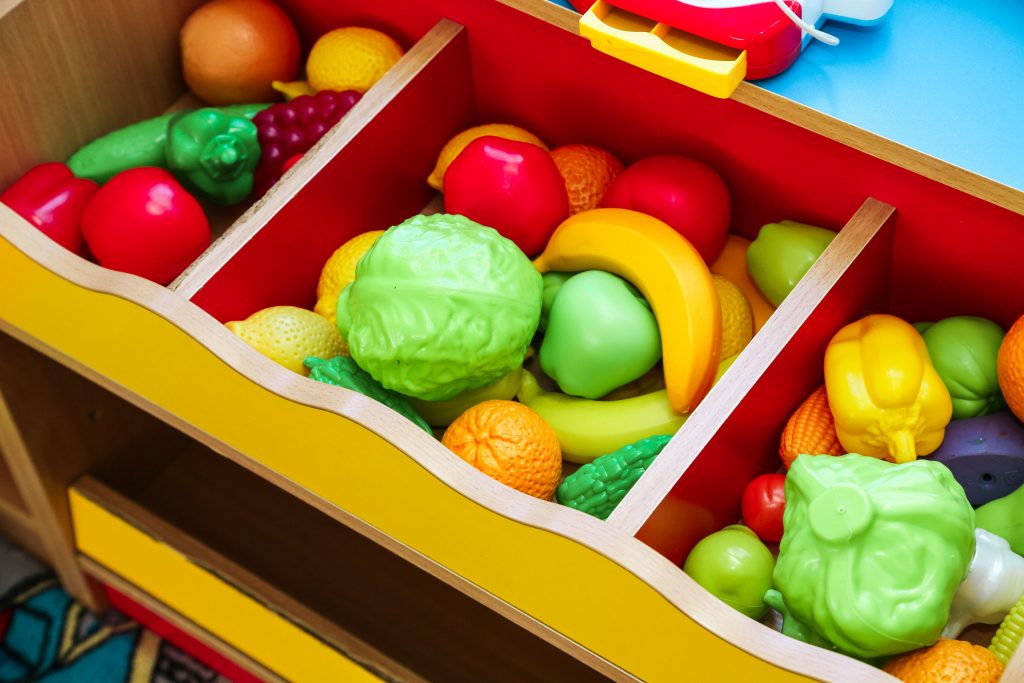
Turning a corner of the living room into a mini grocery store is one of the easiest pretend play setups to pull together, and it packs in a surprising amount of learning. Grab some empty cereal boxes, plastic fruit, and a toy cash register (or just a calculator and some play money), and let the shopping begin.
Here’s what kids practice during this kind of play:
- Basic math skills like counting money and making change
- Reading and recognizing labels or logos
- Categorizing items by type, such as fruits, snacks, or dairy
- Social skills like greeting customers and taking turns being the cashier
You can level this up by giving your child a short shopping list to “read” and follow, which sneaks in some early literacy practice too.
2. Build a Backyard Campsite
You don’t need an actual trip to the woods to get the benefits of a camping adventure. A blanket fort, a flashlight, and some stuffed animals as camping buddies are enough to transform a living room or backyard into a full-blown campsite.
Kids can take turns being the camp leader, pitch a pretend tent, cook imaginary meals over a “campfire” made of red and orange paper, and even go on a scavenger hunt for pinecones or leaves. This kind of play encourages gross motor skills if it happens outside, and it naturally introduces science topics like weather, nature, and even basic astronomy if you throw in some glow-in-the-dark stars for a nighttime version.
3. Open a Pretend Veterinary Clinic
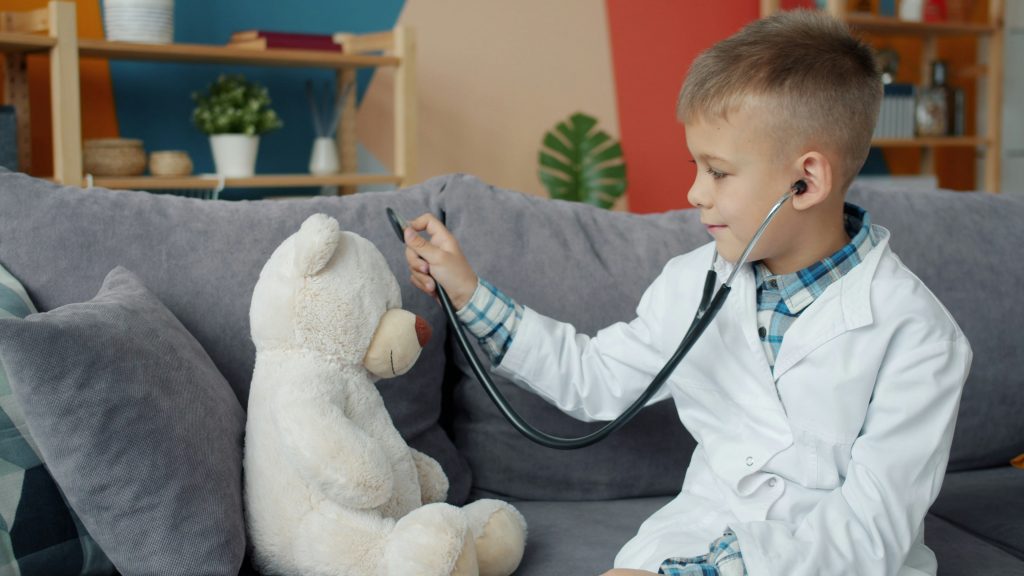
Kids who love animals will especially enjoy running their own vet clinic. Line up a few stuffed animals as patients, grab a toy stethoscope or make one out of string and a bottle cap, and let your child play doctor for the day.
This type of role play builds empathy in a really tangible way, since kids have to think about how to comfort a “scared” or “hurt” animal patient. It also introduces basic anatomy and health concepts, like why animals need checkups or what a bandage is for. Plus, keeping track of appointments and patient files (even scribbled ones) is a fun, low-pressure way to practice early writing skills.
4. Create a Restaurant or Cafe

Restaurant pretend play is a classic for a reason. It’s flexible, it scales up or down depending on how much time you have, and it naturally involves the whole family or a group of friends. Set up a small table as the dining area, hand your child a notepad to take orders, and let them either cook up pretend dishes or use real (safe) snacks they can serve.
Some fun add-ons include:
- A handwritten or drawn menu with prices
- Play money for paying the bill
- Aprons or chef hats for a bit of costume flair
- A “specials board” that changes daily
Beyond the obvious math and reading practice, running a pretend restaurant teaches kids about responsibility and customer service, which are surprisingly big concepts for little minds to explore.
5. Turn Storytime into Acting Time
Reading a bedtime story is wonderful on its own, but turning that story into a mini performance takes the learning up a notch. After reading a favorite book, ask your child to act out their favorite scene, either alone or with siblings and friends playing different characters.
This kind of dramatic retelling strengthens reading comprehension because kids have to really understand a story’s plot and characters to act it out convincingly. It also builds confidence and public speaking skills, since performing in front of an audience, even a small one made up of stuffed animals, takes a bit of bravery. Over time, kids start adding their own twists to the stories, which is a great early step toward creative writing.
6. Set Up a Pretend Post Office
A pretend post office is an underrated pick that combines writing, sorting, and a bit of imagination. All you need is some envelopes, stickers to use as stamps, and a mailbox made from a shoebox. Kids can write or draw letters to family members, sort mail by “address,” and deliver packages around the house.
This activity is especially great for early writers because it gives real purpose to practicing letters and words. Instead of writing just to practice, kids are writing because someone is going to receive their message, which makes the whole activity feel meaningful. It’s a nice example of how creative approaches to childhood education can turn a routine skill like handwriting into something kids actually look forward to doing.
7. Host a Pretend Science Lab
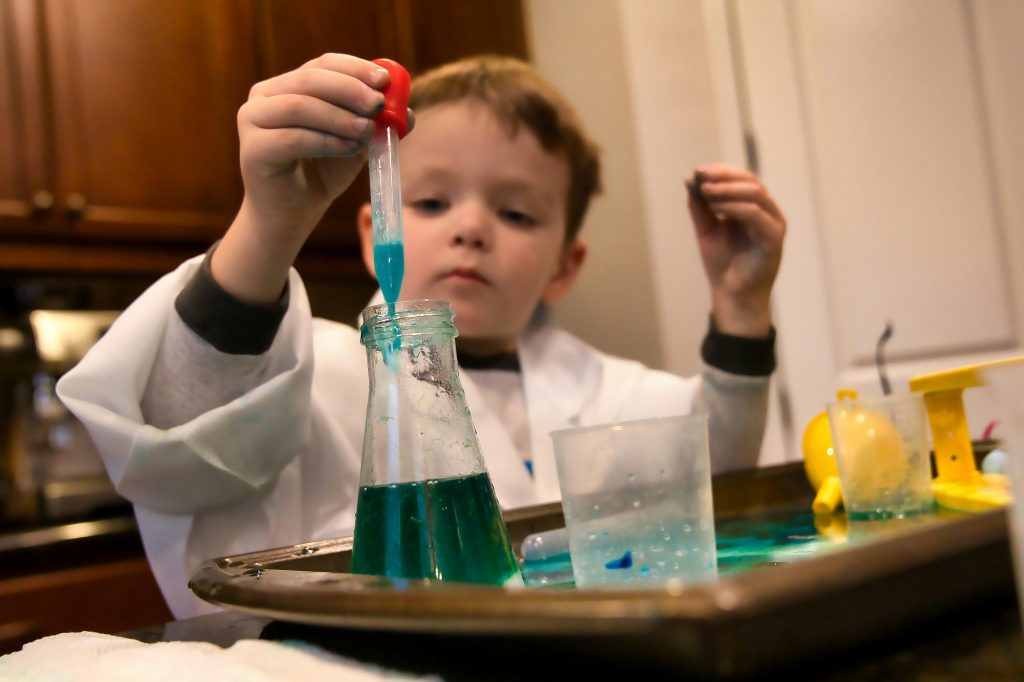
Kids naturally love mixing things together and watching what happens, so why not lean into that with a pretend science lab setup? Give your child some safe household items like measuring cups, water, food coloring, and baking soda, along with a lab coat (an old button-down shirt works great) and some safety goggles.
While this one edges closer to real experimentation than pure pretend play, the role-play element of being a “scientist” adds a layer of imagination that makes kids more engaged. They get to hypothesize what will happen, observe results, and even record their findings on a clipboard. This is a fantastic way to introduce early scientific thinking, like cause and effect, without it feeling like a formal lesson.
8. Build a Construction Site
For kids who love trucks, tools, and building things, a pretend construction site is pure gold. Toy hard hats, plastic tools, and building blocks are all you really need. Cardboard boxes can become buildings under construction, and a sandbox or a bin of rice can double as the “dirt” being moved around.
This kind of play builds spatial reasoning and fine motor skills as kids stack, sort, and maneuver materials. It also introduces basic engineering concepts, like why a structure needs a wide base to stay stable, all through hands-on trial and error. Group construction play is especially good for teaching collaboration, since kids often have to negotiate roles like who’s driving the truck and who’s laying the bricks.
9. Play Pretend Weather Reporter
This is a fun one for kids who are curious about the world outside their window. Set up a “news desk” with a toy microphone (or a spoon in a pinch), and let your child deliver the daily weather report, either based on what’s actually happening outside or a completely made-up forecast involving rainbows and dinosaurs.
Weather reporter pretend play introduces basic science vocabulary like temperature, clouds, and seasons. It also builds verbal confidence, since kids have to speak clearly and in complete sentences to get their “report” across. If you want to add an art component, have your child draw the weather they’re describing on a whiteboard or poster before going “on air.”
10. Run a Pretend Animal Rescue Center
Combining a love of animals with a bit of storytelling, an animal rescue pretend play setup lets kids care for stuffed animals or toy figures that need to be “rescued,” fed, and given a safe home. You can set up different stations, like a feeding area, a resting area, and an adoption desk where the animals eventually go to their new families.
This type of play is wonderful for building empathy and responsibility, since kids have to think about what each animal needs to feel safe and cared for. It also naturally opens up conversations about kindness toward animals and the environment. Many kids will start narrating little backstories for each rescued animal, which is a great early sign of storytelling and creative thinking taking shape.
Tips for Making Pretend Play Even More Effective
Once you’ve picked an idea or two to try, a few small adjustments can make the experience even richer for your child:
- Follow their lead. If your child wants to turn the grocery store into a pirate ship halfway through, go with it. Flexibility is part of what makes pretend play so valuable.
- Ask open-ended questions. Instead of directing the play, ask things like “What happens next?” or “How is your patient feeling?” to keep their imagination active.
- Rotate props occasionally. Swapping out materials every few weeks keeps kids interested and encourages them to explore new scenarios.
- Join in when invited. Playing alongside your child, even briefly, models new vocabulary and ideas they might not think of on their own.
- Don’t over-script it. The magic of pretend play comes from kids making their own choices, so resist the urge to correct “wrong” answers about how a doctor or chef should act.
Wrapping It All Up
Pretend play might look like simple fun on the surface, but there’s a lot happening beneath it. Every grocery store checkout, campfire story, and pretend vet appointment is quietly building language skills, emotional intelligence, and problem-solving abilities that will stick with kids well beyond childhood. The best part is that none of these ideas require much money or planning. A cardboard box, a few household props, and a willingness to play along are often all it takes to turn an ordinary afternoon into a rich learning experience.
So the next time your child asks you to be a customer at their pretend cafe or a patient at their stuffed-animal clinic, say yes. You’re not just killing time together. You’re helping build the foundation for skills they’ll carry with them for years to come.